
AI Uncovers Bank Data via Supplier: A Wake-Up Call for SA's Third-Party Security Posture
An AI-driven security assessment by Kingly Clark recently exposed data linked to a major South African bank through a supplier, without ever touching the…
In an incident that underscores the escalating complexities of modern cybersecurity, a recent authorised security assessment by South African ethical-hacking firm Kingly Clark brought to light data linked to one of the country's Big-Five banks – not by targeting the bank directly, but through a third-party supplier. This revelation offers a potent and timely lesson for South African businesses, especially those within the security sector, on the imperative of robust supply chain risk management and the transformative power of AI in identifying vulnerabilities.
The engagement began as a routine security test for a local company, commissioned to evaluate the resilience of its digital defences. Kingly Clark's brief was straightforward: assess the client's environment and report back on any weaknesses. What set this assessment apart was the methodology employed: an advanced, AI-driven system was deployed within the client's network. Unlike traditional human-led penetration tests, this AI system operated with unprecedented speed and scope, autonomously navigating the company's contracts, shared drives, login credentials, and client files.
The system's ability to 'read' and connect disparate pieces of information proved instrumental. It systematically processed internal email threads, document stores, and access logs. Crucially, it analysed every contract held by the company, pulling out client names, account references, and connected systems. This comprehensive mapping exercise meticulously built a blueprint of the client's operations and, in doing so, surfaced a direct link to data associated with a major South African bank.
The critical takeaway for the security industry is not that the bank's own defences were breached. They were not. The bank's systems remained untouched, its perimeters unassailed. Instead, the incident vividly illustrates the profound risk inherent in third-party relationships. Data linked to one of the nation's largest financial institutions was accessible through the digital front door of a supplier – a door entirely outside the bank's direct control. This highlights a pervasive blind spot: a company's security posture is only as strong as its weakest link in a complex web of partners and providers.
For private security firms and corporate security departments across South Africa, this incident demands a re-evaluation of current strategies. It's no longer sufficient to fortify internal networks alone. The focus must expand to encompass comprehensive supply chain risk management, including rigorous vetting of suppliers, continuous monitoring of their security hygiene, and a deep understanding of the sensitive data they handle.
Furthermore, the role of AI in this assessment signals a significant shift in the cybersecurity landscape. AI-driven systems can process vast amounts of data, identify subtle relationships, and uncover vulnerabilities at a scale and speed impossible for human teams alone. This capability is not just for ethical hackers; it represents the evolving face of both breach detection and, unsettlingly, potential future threats. The same technology that can expose these intricate pathways to sensitive data will increasingly be vital for developing equally sophisticated defensive mechanisms.
This incident serves as a stark reminder: in an interconnected digital economy, robust security extends far beyond internal perimeters. For South African businesses, and particularly for the security professionals tasked with protecting them, the imperative is clear – embrace advanced detection technologies, rigorously manage third-party risks, and recognise that the next frontier of cybersecurity defence lies in securing the entire supply chain.
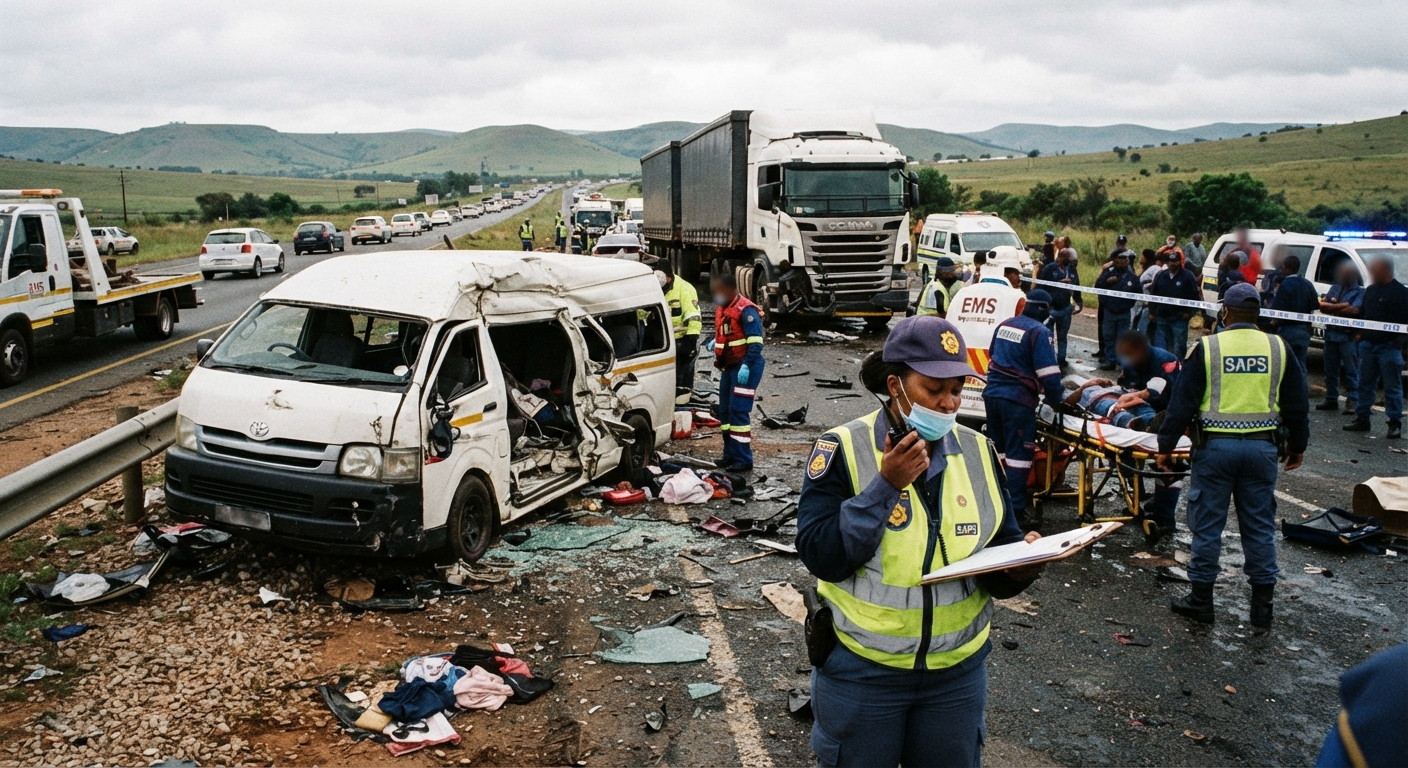
Mpumalanga Road Carnage: A Stark Reminder of South Africa's Broader Safety Challenge
A fatal R541 collision highlights the strain on South African security resources and the critical need for improved road safety as a core component of national

High-Profile Hit: Arrest in Tsengwa Murder Illuminates Organised Crime Threat
SAPS makes an arrest in the murder of former Knysna mayor Aubrey Tsengwa. SecurIntel SA examines the implications of political assassinations for South African

KZN Navigates Dual Threat: Post-Election Unrest & Festive Season Security Surge
SecurIntel South Africa analyzes KZN's evolving security landscape: election unrest, road disruptions, and intensified festive season operations. Understand…