
Municipal Mandate: How Local Election Outcomes Shape SA's Security Future
SecurIntel SA analyzes the implications of the recent local government elections for South Africa's public safety, private security sector, and crime prevention
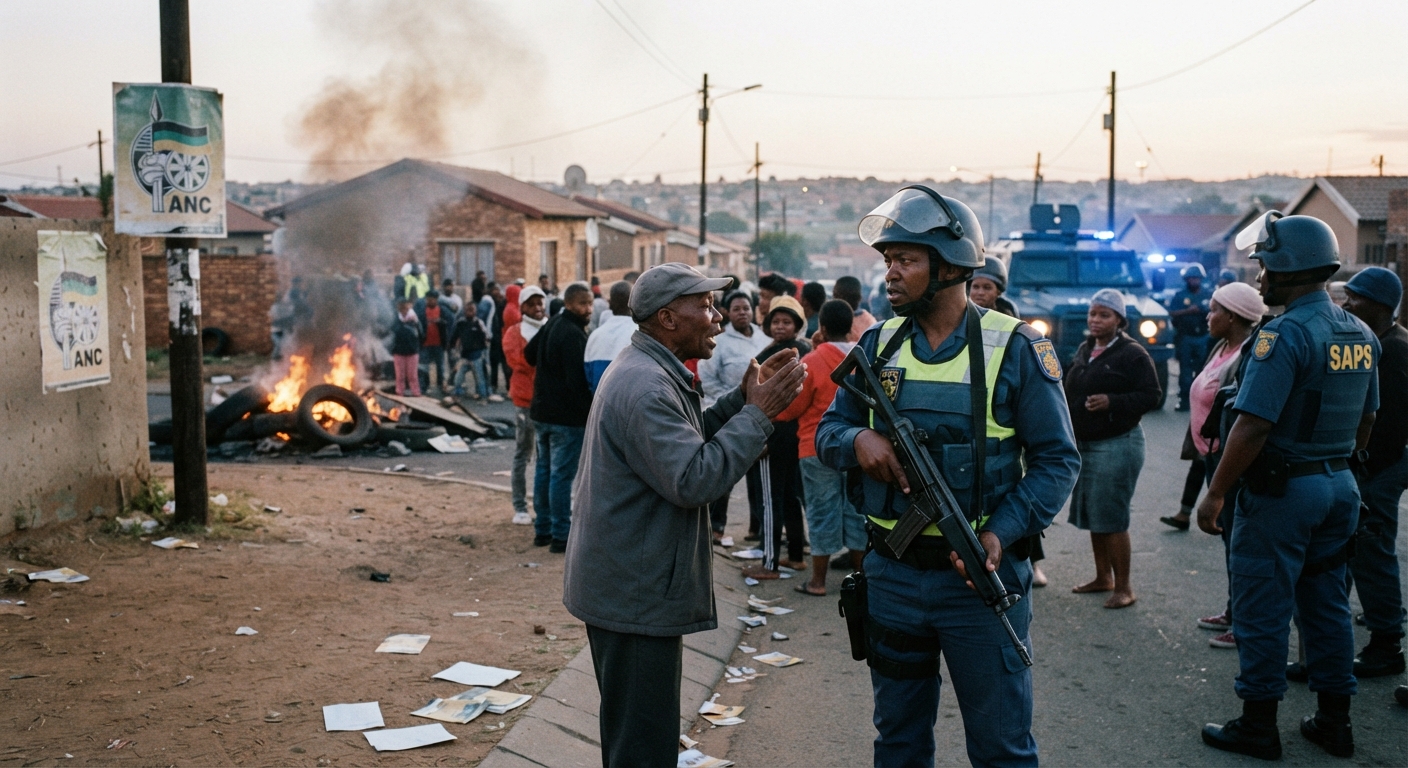
The dust has settled on South Africa's recent local government elections, ushering in a new era for municipal councils across the nation. While President Cyril Ramaphosa's address from the IEC's National Results Operations Centre focused on the enduring strength of democracy and the call for political parties to collaborate, the implications for the country's security landscape are profound and demand close scrutiny from the SecurIntel South Africa audience.
Ramaphosa’s emphasis on political parties working together, especially in municipalities where no single party secured an outright majority, is not merely a call for good governance; it is a critical appeal for stability. In South Africa's volatile socio-economic environment, political uncertainty and fractured local leadership can swiftly translate into operational challenges for public and private security entities, impacting everything from service delivery to crime prevention initiatives.
The New Municipal Landscape
The composition of new councils will directly influence resource allocation, by-law enforcement, and community engagement – all vital pillars of effective public safety. Municipalities are key to maintaining essential infrastructure like streetlights, road networks, and waste management, whose failures often create conducive environments for criminal activity. A stable, functional local government is therefore a prerequisite for effective crime deterrence and response.
Furthermore, the relationship between local authorities and the South African Police Service (SAPS) is crucial. New councils have the opportunity to strengthen community policing forums (CPFs) and facilitate joint operations with SAPS and private security providers. Conversely, political gridlock or instability at the municipal level can cripple these partnerships, leaving communities more vulnerable.
Operational Readiness: A Security Sector Perspective
For private security companies, alarm and camera technology providers, and access control specialists, the electoral outcomes present a dual challenge and opportunity. On one hand, the demand for sophisticated security solutions often surges in areas perceived as unstable or poorly managed by local government. On the other, effective collaboration with competent municipal administrations can streamline operations, permitting, and large-scale urban security projects.
Response services are particularly sensitive to municipal efficiency. Poorly maintained roads, non-functioning traffic lights, or delayed responses to infrastructure faults can severely impede rapid deployment and emergency intervention. The new leadership's commitment to basic service delivery will directly impact the efficiency and safety of security personnel in the field.
The South Africa Angle
In a country grappling with persistently high crime rates and an increasing reliance on the private security industry, the performance of local government is uniquely intertwined with public safety. Unlike many other nations, South Africa's municipalities are on the front lines of crime prevention, influencing everything from urban planning that either deters or invites crime, to the funding and support of local safety initiatives. The high prevalence of private security means that effective municipal governance provides a crucial framework for these services to operate optimally, complementing, rather than solely compensating for, public sector shortfalls. When local government fails, the burden on private security becomes immense, often stretching resources and pushing up costs for homes and businesses.
Source: IOL News